A representative of CTGCT – the Centre of Excellence for Technologies of Gene and Cell Therapy, Gregor Cuzak, attended the 7th regional Caring for Rare 2026 conference in Belgrade on 3 and 4 September, organised by the National Organization for Rare Diseases of Serbia (NORBS). The conference brought together patients and patient organisations, healthcare professionals, researchers, policymakers and international experts around one shared question: how to provide people living with rare diseases with a faster path to diagnosis, better care and new treatment options. (caringforrare.com)
Rare diseases are particularly important for CTGCT. Many gene and cell therapies are being developed specifically for diseases for which existing treatment options are insufficient or do not exist at all. At the same time, rare diseases clearly illustrate one of the major limitations in developing new therapies: individual countries often have too few patients, experts and research capacities to carry out the entire pathway from research to clinical trials and treatment on their own. International cooperation, networking between centres and the early involvement of patient communities are therefore essential parts of the translational process.
The conference programme highlighted this need from several perspectives. In addition to discussions on the future of rare disease policies, individual sessions focused on epidermolysis bullosa, pulmonary hypertension and X-linked hypophosphatemia, support for families, and the use of artificial intelligence and digital tools to inform and empower rare disease communities. An important part of the programme was also dedicated to patients who remain without a diagnosis despite a long diagnostic journey.
From the perspective of CTGCT, the discussion on undiagnosed rare diseases was particularly relevant. Modern genomic and transcriptomic approaches were presented as tools that can open up new possibilities for patients in whom standard diagnostic methods have failed to provide an answer. However, one of the conference’s clear messages was that technology alone is not enough. Progress equally depends on multidisciplinary approaches, cooperation between clinicians and molecular researchers, and the exchange of knowledge between centres in different countries.
This is also one of CTGCT’s core principles. The development of an advanced therapy is not a linear process in which a researcher develops a solution and then simply hands it over to the clinic. Early collaboration between researchers, clinicians, patients, regulatory experts and other stakeholders is required. In rare diseases, this must also include a cross-border dimension: connecting patient populations, reference centres and research groups.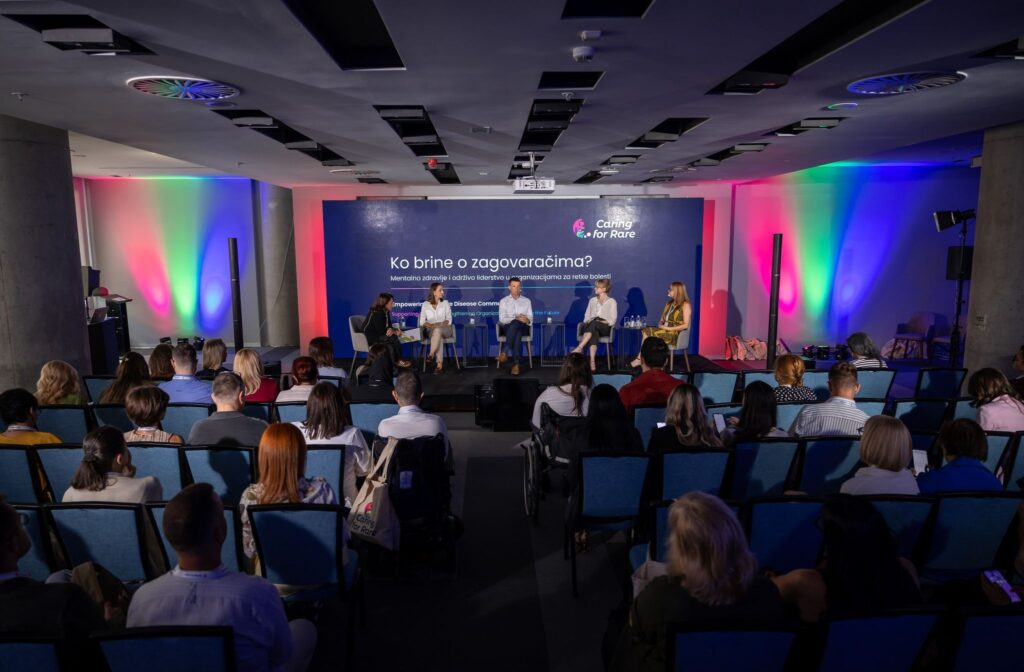
Another important message from the conference was that the patient experience must be part of developing solutions. The panel on epidermolysis bullosa placed the experiences of patients and their families, access to care and differences between countries at the centre of the discussion. The organisers particularly highlighted the importance of regional cooperation and the exchange of good practices. In the session on pulmonary hypertension, the discussion brought together the clinical perspective and the patient experience, emphasising that progress in diagnosis and treatment gains its true significance only when it translates into longer and better-quality lives.
Gregor Cuzak also participated as a panellist in the session “Who Cares for the Advocates? Mental Health and Sustainable Leadership in Rare Disease Organisations”, together with representatives of patient organisations from Serbia, Croatia and North Macedonia. From the CTGCT perspective, the discussion was particularly relevant in addressing how to build strong and sustainable patient organisations that can work over the long term as partners to researchers, clinicians and institutions. In rare diseases, patient organisations are not only a source of support for individuals, but are often also key partners in identifying unmet needs, connecting patients, communicating about research and shaping future clinical trials.
 For CTGCT, participation in Caring for Rare also provided an opportunity to strengthen the regional network of patient organisations and other stakeholders. In future gene and cell therapies, such connections will be important both for the early involvement of patients in therapy development and for designing clinical trials and connecting sufficiently large patient populations for diseases affecting very small numbers of people.
The conference repeatedly pointed towards the same conclusion: in rare diseases, progress does not happen within a single discipline, institution or country. It happens when researchers’ knowledge, clinicians’ experience and patients’ lived experience are brought together in a shared translational process. Building such an environment is one of CTGCT’s key missions.