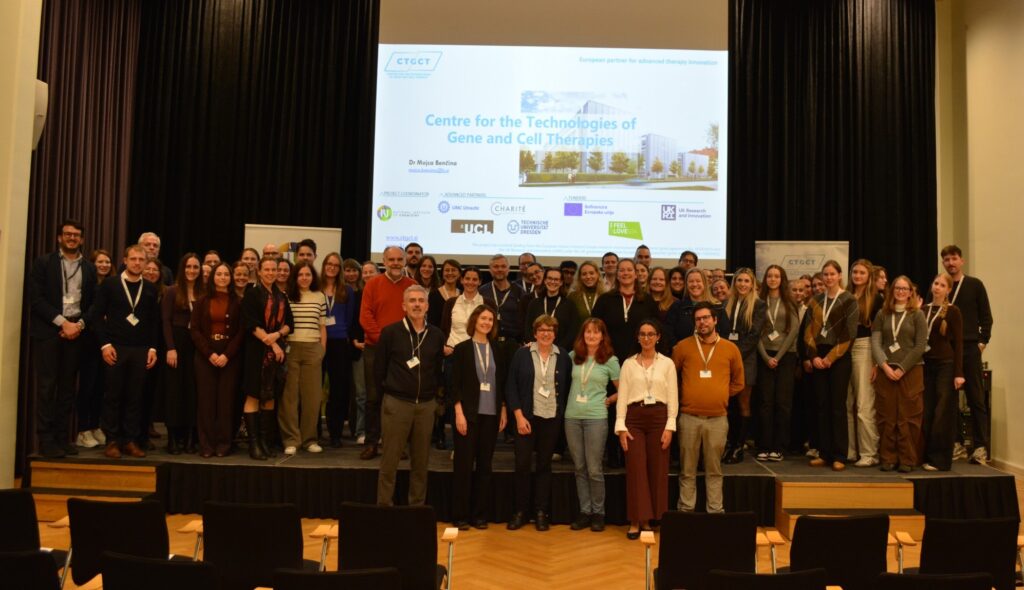
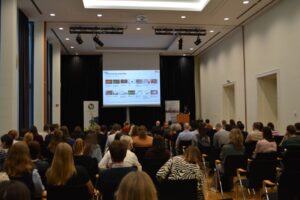
From engineered immune cells and RNA therapeutics to stem-cell models and patient-led gene therapy initiatives, CTGCT Day 2026 brought together researchers from across Europe to discuss the latest developments in advanced therapies. Held at Grand Hotel Union in Ljubljana, the meeting welcomed 156 participants from more than ten countries and featured 16 talks and 18 posters.
A recurring theme throughout the conference was translational science: how to move promising discoveries from advanced biological models into therapies that can reach patients. The programme covered immune engineering, viral and non-viral gene delivery, stem cell technologies, manufacturing platforms and regulatory pathways.
The scientific programme opened with Zsolt Sebestyen, who discussed biomimetic strategies for immune receptor-based drug development.
Another highlight was the lecture by Massimo Dominici, who presented advances in engineering cellular therapeutics for refractory pancreatic solid tumours.
Jan Procházka from the Czech Centre for Phenogenomics showed how integrated phenotyping connects disease mechanisms to therapeutic endpoints and highlighted the continued importance of sophisticated mouse models in translational research.
Researchers from the National Institute of Chemistry also contributed strongly to the programme. Petra Sušjan Leite presented RNA-based therapeutic strategies for CTNNB1 haploinsufficiency, while Duško Lainšček described approaches that decouple reactogenicity from efficacy in nucleic-acid therapeutics.
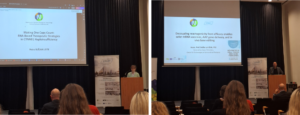
In the final scientific session, Sebastian Diecke showcased applications of pluripotent stem cells, automation and disease modelling. Particularly memorable was his discussion of the intersection between cell therapies, conservation biology and art, demonstrating how stem-cell technologies increasingly reach beyond traditional biomedical boundaries. The final session was also attended by students from the Girls in STEM initiative, who joined the conference to gain first-hand exposure to current biomedical research and advanced therapy development.
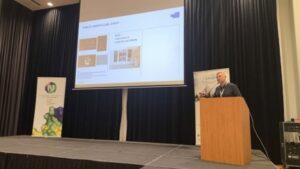
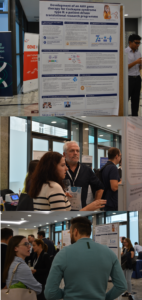
The poster exhibition remained active throughout the day and generated lively discussion. Particularly notable was the poster from the Viljem Julijan Association for Children with Rare Diseases, which outlined the development of an AAV-based gene therapy programme for Cockayne syndrome type B and demonstrated the growing impact that patient organisations can have in accelerating rare-disease research. The session also featured three posters from members of CTGCT, showcasing ongoing research activities in the centre.
The breadth of the programme extended well beyond the keynote presentations. Contributions from researchers at EATRIS, the National Institute of Biology, the University of Maribor, Sartorius BIA Separations, Masaryk University, Bio-ReCell and several other academic and industrial organisations highlighted the diversity of expertise driving the field forward. Together, these talks provided insights into translational research, advanced therapy manufacturing, disease modelling, gene delivery technologies and the practical challenges of bringing innovative therapies closer to patients.
Across the day, discussions repeatedly returned to the same challenge: how to translate biological insight into therapies that can make a meaningful difference for patients. From engineered immune cells and RNA-based therapeutics to advanced disease models, gene delivery technologies and rare-disease programmes, the presentations highlighted both the scientific complexity of the field and the pace at which new therapeutic approaches are moving toward clinical application. CTGCT Day 2026 provided a snapshot of a rapidly evolving landscape, where progress increasingly depends on collaboration between researchers, clinicians, industry partners and patient organisations. Building on this year’s strong international programme and engagement from the community, the members of the CTGCT team are already looking ahead to the next edition, CTGCT Day 2027.