
Imagine being able to open the “instruction manual” of a human cell and fix a single typo that causes a life-threatening disease. This is no longer science fiction; it is the reality of base editors, a tool used by researchers like Dr. Shady Sayed at TU Dresden.
In our latest episode of the CTGCT Science Talks webinar series, Dr. Sayed shared his groundbreaking work on using CRISPR base editors to treat cancer.

The Power of a Single Letter
Our DNA is coded by 4 chemicals represented by the letters: A, T, C, and G. Sometimes, just one of these letters gets swapped for another (a point mutation) which can lead to devastating results.
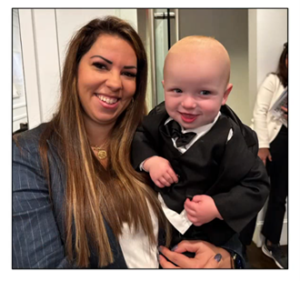
Shady opened his talk with the story of “KJ,” a baby born with a rare life-threatening genetic liver disease caused by a single point mutation. Typically, children with this genetic condition suffer from lethal ammonia accumulation in the blood because the liver cannot properly break down protein, the only cure is a liver transplant, but sadly children don’t grow big enough to allow for a liver transplantation. In a remarkable feat of science, within only 8 months, researchers developed a customized base editor that corrected this single letter in KJ’s DNA, reversing his pathological condition and allowing him to celebrate his first birthday (KJ pictured with Nicole Gaudelli, the inventor of the Adenine Base Editing technology). This success story sets the stage for a new frontier in medicine: fixing the mutations that drive genetic disease .
Most people have heard of CRISPR-Cas9 as “molecular scissors” that cut DNA. While powerful, cutting DNA can sometimes lead to unintended changes. Base editors are a more refined version of this technology. Instead of cutting, they act more like a molecular eraser and pencil, chemically changing one letter into another (for example, an A into a G) without breaking the DNA strands.
Targeting the “Guardian of the Genome”
Dr. Sayed’s research focuses on p53, a protein known as the “guardian of the genome” because it prevents cells from becoming cancerous. Unfortunately, p53 is the most frequently mutated gene in human cancer, found in roughly half of all cancer patients.
One specific “typo” in the p53 gene, known as the R273H mutation, affects nearly one million patients worldwide. Shady and team of Prof. Buchholz developed a base editor to correct this specific mutation back to its healthy state or “wild type” state.
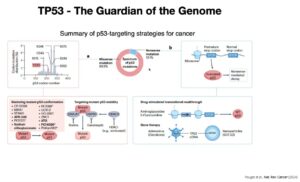
The results have been striking:
- Restoring Function: When the p53 mutation was corrected in pancreatic, colorectal, and melanoma cancer cells, the cells essentially “remembered” how to be healthy. They stopped dividing rapidly or underwent programmed cell death.
- “Hit and Run” Delivery: To get these editors into cells, the team uses messenger RNA packaged in Lipid Nanoparticles (LNPs) (similar to the technology used in some vaccines). This “hit and run” approach means the editor does its job and then disappears, reducing the risk of long-term side effects.
- Success in Models: In studies with mice, this treatment led to significant tumor regression. In some cases, the cancer cells in the treated animals simply seem to “vanish”. A manuscript with the key findings of this study is currently in preparation by Dr. Sayed and collaborators.
The Future: Personalized Molecular Surgery
The ultimate goal of this research is a future where cancer therapy is entirely personalized. Doctors could sequence a patient’s tumor, identify the specific “typos” in their DNA, and then create a custom base editor to “perform surgery” on those mutations.
We would like to extend our sincere thanks to Dr. Shady Sayed for sharing his pioneering research with the CTGCT community and for his ongoing dedication to advancing these life-saving technologies. Dr. Sayed’s work is supported by the National Translational Tandem Program for Gene- and Cell-based Therapies (nTTP-GCT). He recently started his own research group within the Mildred Scheel Early Career Center network at the Faculty of Medicine Carl Gustav Carus, TU Dresden. He is a fellow of the nTTP-GCT and focuses on pioneering personalized molecular surgery for lung cancer.