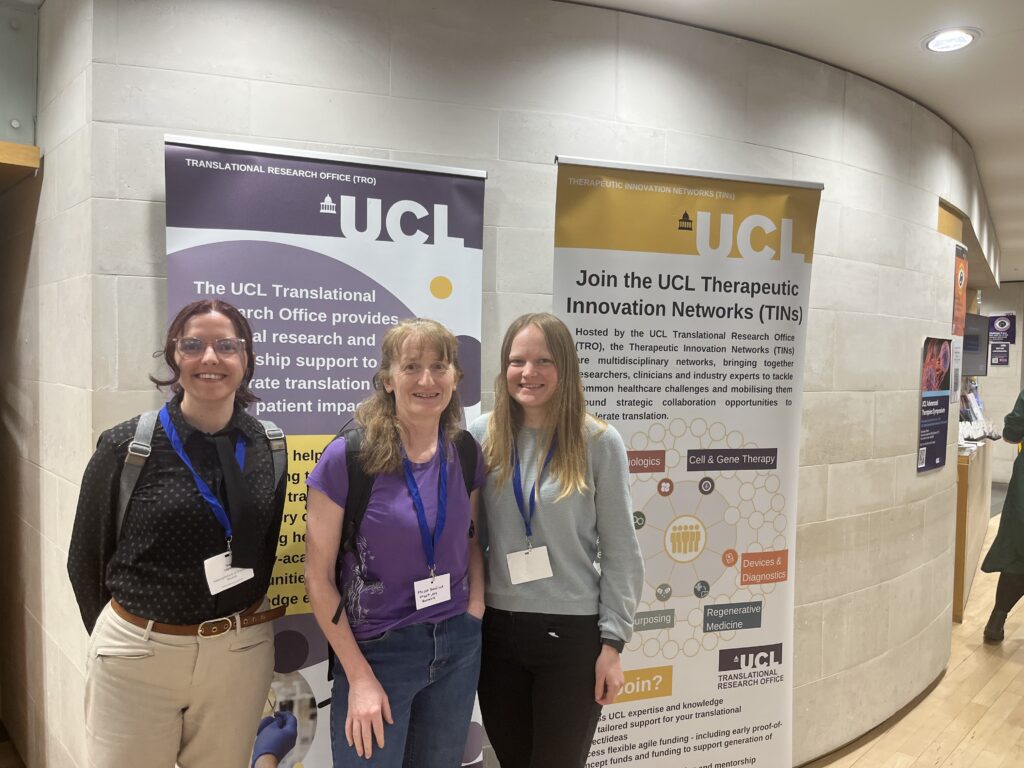
Last week 3 of our colleagues (Tjaša, Mojca and Tina) attended the UCL Advanced Therapies Symposium 2026 in London, an event dedicated to recent developments in cell and gene therapies and to strengthening links between academic, clinical and industry partners. The symposium took place on 22 April 2026, and was organised by the UCL Therapeutic Innovation Networks – Cell and Gene Therapy and the UCL Translational Research Office. The programme brought together researchers, clinicians, patient representatives and industry experts to discuss how advanced therapies are moving from discovery towards clinical translation. Across the day, lectures and panel discussions explored a broad range of topics, including regenerative medicine, RNA therapy, single-cell and spatial transcriptomics, intranasal mesenchymal stromal cell therapy, CAR-T cell approaches for autoimmune disease, patient access to therapies for rare diseases, and in vivo gene therapy.
A particularly relevant theme for our colleagues was the expansion of CAR-T cell therapies beyond oncology. Several sessions focused on the potential of CAR-T approaches in autoimmune and neurological conditions, including discussions on immune reset strategies and the clinical development of CAR-T therapies for children and young people with autoimmune disease. These contributions reflected the rapid broadening of cell therapy applications and the importance of connecting basic research, clinical needs and translational pathways. You can read about the event in this article by UCL.
In addition to the symposium, our CTGCT colleagues’ visit included meetings with UCL partners to discuss the progress of the CTGCT project and opportunities for future collaboration. They also visited an advanced biomedical imaging facility, where different approaches for visualising animal models were presented, including PET, MRI and CT-based methods. There they had the opportunity to discuss with the UCL team about behavioural testing protocols, and ask practical recommendations that will support future experimental planning at CTGCT. The trip provided a valuable opportunity to follow current developments in advanced therapies, exchange experience with international partners, and gather practical insights relevant to current projects. Events such as this support the centre’s mission to build scientific, technical and translational capacity in gene and cell therapy, while strengthening collaboration with leading institutions working in the field. Finally we want to thank Pamela Tranter, Jane Kinghorn and the rest of the team at UCL that invited to the symposium and help us meet and discuss with UCL researchers.