For families affected by a rare and ultra-rare genetic disorder, the distance between a promising laboratory result and an accessible treatment can feel impossibly large. Developing a gene therapy requires much more than identifying a defective gene. Researchers must identify a delivery system, demonstrate biological activity, establish a safe dose, manufacture the product under tightly controlled conditions and satisfy demanding regulatory requirements. For diseases affecting only a few hundred known patients, every scientific step is accompanied by an equally difficult question: who will fund the next one?
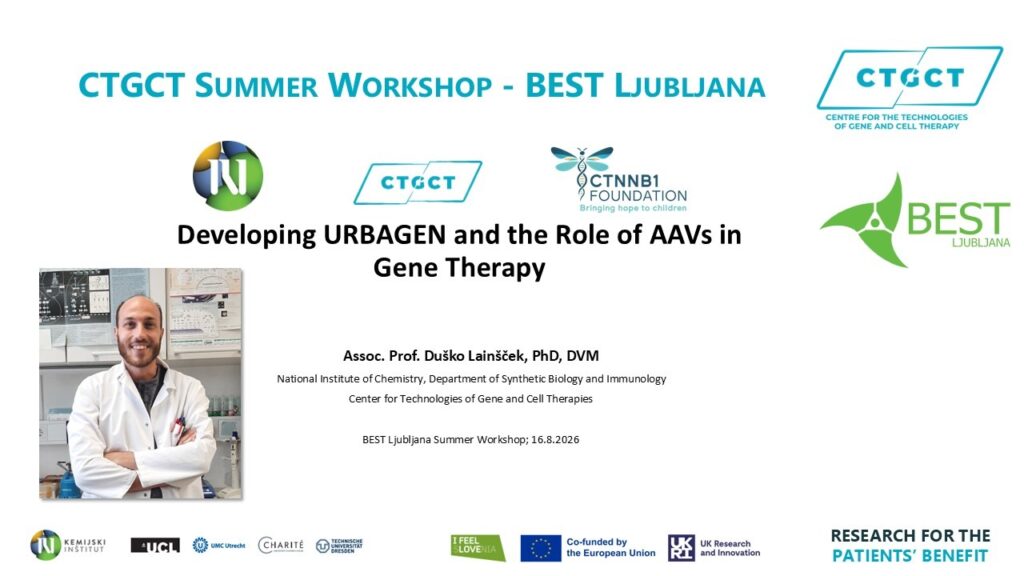
In a lecture on the development of URBAGEN and the role of adeno-associated viruses in gene therapy, Associate Professor Duško Lainšček described how an international, patient-driven collaboration moved an experimental treatment for CTNNB1 syndrome from vector design to an early-stage clinical trial. The project illustrates both the promise of translational gene therapy and the scientific, financial and policy barriers that continue to limit treatment development for ultra-rare diseases. This article is based on the lecture given during the CTGCT Summer Workshop organized in collaboration with BEST Ljubljana.
Key concepts
- CTNNB1 syndrome: A rare neurodevelopmental disorder caused by a disease-associated change in one copy of the CTNNB1 gene. The gene encodes β-catenin, a protein involved in cell adhesion, signaling, synaptic function and the integrity of biological barriers. The syndrome can affect movement, muscle control, speech, cognition and behavior.
- Gene addition therapy: A therapeutic strategy that delivers a functional copy of a gene to cells. Instead, it aims to give targeted cells the instructions needed to produce more of the missing or insufficient protein.
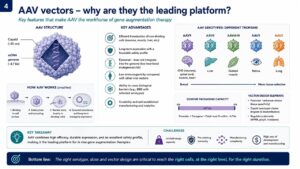
- Adeno-associated virus, or AAV: A small virus that can be engineered as a delivery vehicle for therapeutic DNA. Recombinant AAV vectors are designed without the viral genes required for replication, which helps prevent them from multiplying after administration.
- AAV9: The shell of an AAV commonly investigated for therapies targeting the central nervous system. Its biological properties make it useful for delivering genetic material to neural tissues, although its efficiency, immune recognition and dose-related toxicity remain important limitations. They are usually referred as AAV9 vectors.
- Transgene cassette: The engineered DNA package carried by a vector. It usually contains the therapeutic gene together with regulatory elements that determine what, where, strongly it is expressed.
- Biodistribution: The study of where a therapeutic vector travels after administration. Even when a treatment is delivered close to the brain, researchers must determine whether it also reaches organs such as the liver or peripheral nervous system.
- GMP and GLP: Good Manufacturing Practice governs the controlled production and quality testing of medicines. Good Laboratory Practice provides a quality framework for regulated non-clinical safety studies. Both require rigorous procedures, records and traceability.
- NOAEL: The no-observed-adverse-effect level, meaning the highest tested dose at which no treatment-related adverse effects are detected. It helps researchers select a starting dose and safety margin for a clinical trial.
Why AAVs are powerful, but not simple
AAV vectors have become important tools in gene therapy because they can transport therapeutic DNA into selected tissues. After an AAV vector enters a cell, it releases this DNA into the cell’s nucleus, where the genetic instructions can be read and used to produce the required protein.
In most cases, the delivered DNA does not become a permanent part of the cell’s chromosomes. Instead, it remains in the nucleus as a separate, stable piece of genetic material. Scientists call this an episome, but it can be understood as an additional set of instructions stored alongside the cell’s own DNA rather than inserted directly into it.
Keeping the therapeutic DNA separate from the chromosomes reduces the likelihood that it will disrupt one of the cell’s genes. However, it does not eliminate every risk, and patients still require long-term monitoring. The persistence of the treatment may also depend on the type of cell involved. In frequently dividing cells, such as some liver cells, the additional DNA may gradually be lost as the cells divide. In neurons, which generally do not divide, it may remain active for much longer and continue directing the production of the therapeutic protein.
This distinction is particularly relevant for a therapy targeting the nervous system. Long-lasting activity in neurons could support sustained beta-catenin production after a single administration. At the same time, the duration, distribution and level of that production must be investigated through long-term clinical follow-up.
AAV delivery also has important limitations. The vector can carry only a small amount of genetic material, approximately 4700 bases (the letters of the DNA) when the therapeutic gene and its regulatory elements are counted together. It is therefore unsuitable for some larger genes unless researchers develop alternative methods of packaging and delivery.
Immunity presents another major obstacle. Naturally occurring AAVs are widespread, so some people already have antibodies against particular types of AAV. These antibodies may intercept a therapeutic vector before it reaches the target tissue, reducing or preventing the treatment’s effect. Administration can also cause the immune system to develop new antibodies, making it difficult to give the same AAV-based therapy again.
Dose selection is equally challenging. Too little vector may reach too few cells to produce a meaningful effect. A higher dose may improve tissue coverage, but it can also increase the risk of immune reactions and damage to organs or tissues, including the liver and sensory nerve structures known as the dorsal root ganglia. Researchers must therefore identify a dose that is high enough to have a biological effect but low enough to maintain an acceptable safety margin.
Engineering URBAGEN for CTNNB1 syndrome
CTNNB1 syndrome is a progressive neurodevelopmental condition caused by a harmful change in one copy of the CTNNB1 gene. This gene provides the instructions for making beta-catenin, a protein involved in communication between cells, nervous-system development and the connections that allow nerve cells to function together. When cells produce too little functional beta-catenin, children can experience difficulties with movement, muscle control, speech and cognitive development.
URBAGEN is designed to provide affected cells with a functional copy of CTNNB1. To achieve this, researchers had to create a compact package of therapeutic DNA that could fit inside an AAV9 vector. This engineered package is called a genetic cassette. It contains the functional CTNNB1 gene together with additional DNA instructions that control how the gene is used after it enters a cell.
One of these control elements is the promoter. A promoter acts like an on switch combined with a volume control: it tells the cell to read the therapeutic gene and influences the beta-catenin production within the cell. Choosing the right promoter is important because too little activity may not provide a meaningful therapeutic effect, while excessive or poorly targeted activity could increase safety risks.
The researchers initially created six versions of the therapeutic DNA package. Each version combined the CTNNB1 gene with different control elements, including different promoters. They compared these candidates in laboratory experiments to determine which one produced an appropriate amount of beta-catenin and was most suitable for further development. The selected package was then placed inside an AAV9 vector, which acts as the delivery vehicle that carries the therapeutic instructions into cells.
The team also included an additional safety mechanism intended to reduce beta-catenin production in tissues where unwanted activity could be harmful, particularly the liver and the dorsal root ganglia, which are clusters of sensory nerve cells located near the spinal cord. This mechanism uses naturally occurring molecules called microRNAs. Different tissues contain different combinations of microRNAs, allowing researchers to use them as biological markers of where the therapeutic gene should remain less active.
The therapeutic DNA package was designed with short recognition sequences for microRNAs found in these off-target tissues. If the vector enters one of those cells, the microRNAs recognise the therapeutic message and cause it to be broken down before large amounts of beta-catenin can be produced. The vector may still enter the cell, but the safety mechanism helps prevent the cell from acting on its instructions. In this way, the researchers aimed to preserve therapeutic activity in relevant parts of the nervous system while limiting unwanted activity elsewhere.
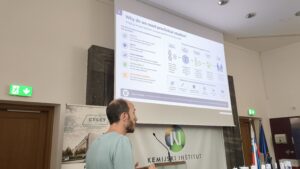
The selected design was first tested in cultured cells and then in models created from patient-derived stem cells, including organoids. Remember we told you iPSCs are important. If you don’t, we recommend reading our article From Skin Cells to Stem Cells: Reprogramming Cells to Study Disease. Organoids are small, three-dimensional groups of cells grown in the laboratory to reproduce selected features of human tissue. They cannot represent the full complexity of the human brain, but they allow researchers to study how patient-derived neural cells respond to experimental treatment.
In the models described during the lecture, treatment increased CTNNB1 activity and beta-catenin production. Researchers also observed changes in biological markers associated with nerve-cell development and communication. These findings suggested that the therapeutic instructions were reaching the cells and functioning as intended, providing the evidence needed to continue into animal studies.
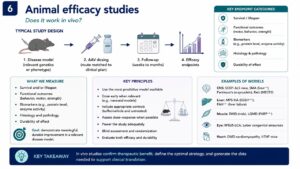
Because no suitable animal model was readily available, the team developed mice with reduced beta-catenin production to reproduce selected aspects of CTNNB1 syndrome. After administering different doses of the vector, the researchers assessed movement, walking patterns and exploratory behavior. According to the results, treated animals showed dose-related improvements in several measurements, while analyses of brain tissue confirmed the presence of the delivered DNA and increased beta-catenin production.
These experiments showed that URBAGEN could deliver a functional CTNNB1 gene and generate measurable biological effects in laboratory models. However, results from cells, organoids and mice cannot establish whether a treatment will be safe or effective in people. They form part of the evidence required to justify more extensive safety studies and, eventually, carefully controlled clinical testing.
Building a safety case before testing the therapy in people
Showing that an experimental therapy produces encouraging results in cells or animals is only one step towards clinical use. Before it can be tested in people for the first time, researchers need to answer several safety questions. They must find out where the treatment travels in the body, which cells use the delivered gene, what unwanted effects may occur at different doses and whether the version made for patients behaves like the one tested during the earlier research.
The URBAGEN programme therefore included studies of biodistribution, meaning where the vector and its genetic material travel after administration. It also included toxicology studies, which look for harmful effects caused by a treatment, and longer-term studies that monitor whether problems appear later.
During these studies, researchers observed the animals’ general health, development and body weight. They examined blood-cell counts and measured signs of liver and kidney function. They also tested how well the blood was able to clot and examined tissue samples under a microscope for signs of injury or disease.
Particular attention was paid to the liver, brain and dorsal root ganglia. The dorsal root ganglia carry information about sensations such as touch, temperature and pain from the body to the central nervous system. The liver and dorsal root ganglia are monitored carefully in AAV research because some high-dose AAV treatments have caused unwanted effects in these tissues in the past.
According to the lecture, the principal safety studies did not identify clinically important changes caused by URBAGEN at the dose proposed for clinical testing. This did not prove that the treatment was free of risk. Rather, it indicated that the available evidence supported moving forward with a carefully monitored early clinical trial.
Unexpected findings cannot simply be excluded because they appear inconvenient or unrelated. Researchers must document them, investigate possible explanations and allow regulators to assess the evidence. Transparent reporting is essential for protecting trial participants and maintaining confidence in the development process.
The programme also included a study in non-human primates. These animals are sometimes used before a clinical trial because aspects of their anatomy and nervous system are more similar to those of humans than those of mice. Such studies can provide information about how the treatment is delivered, where it travels and how the body responds to it. However, they cannot predict every effect that may occur in patients.
Only a small number of animals were included in each group. Duško explained that these studies are extremely expensive, making it important to collect as much relevant information as possible from each animal. Researchers assessed the animals’ general condition and neurological reflexes, measured indicators of liver health and blood clotting, and performed histopathology assessment. These assessments did not identify harmful effects attributed to URBAGEN in the study.
The researchers also measured where the AAV vector travelled and how much of the therapeutic gene was present in different tissues. These results were considered together with the findings from mice. The combined information helped the team select a dose for the first clinical trial.
Dose selection is a careful balancing exercise. The dose must be high enough to have a reasonable chance of producing a biological effect, but low enough to limit the possibility of harmful reactions. Researchers also establish a safety margin by comparing the proposed human dose with doses that did not cause significant adverse effects in animal studies. This approach reduces uncertainty, but it cannot eliminate it.
Manufacturing is another essential part of safety. A vector produced on a small scale for an early laboratory experiment cannot automatically be used in patients. The clinical product must be manufactured under Good Manufacturing Practices, usually abbreviated to GMP.
GMP is a quality system that controls how medicines are produced, tested, stored and documented. It is designed to ensure that each batch contains the intended product, has an acceptable level of purity and is made consistently. Manufacturers must also test for contamination and confirm that the vector remains capable of delivering the therapeutic instructions.
The research team must show that the larger-scale product made for the clinical trial has the same essential characteristics as the material used in the supporting studies. This includes confirming its identity, purity and biological activity. If the manufacturing process changes substantially, additional studies may be needed to demonstrate that the new product is still comparable.
The estimation is that GMP manufacturing alone can cost several million euros, even when production is organized through a non-profit model like in this case was done by the CTNNB1 Foundation. These expenses come before many of the wider costs associated with running a clinical trial, monitoring patients and applying for permission to make the therapy generally available. For ultra-rare diseases, manufacturing is a technical challenge. It is also one of the largest financial barriers between a promising scientific idea and a treatment that can reach patients.
Early clinical observations require cautious optimism
At the time of the presentation, two patients had reportedly received URBAGEN.
The first purpose of an early-stage trial is normally to investigate safety and tolerability. Safety assessments examine whether the treatment causes harmful effects, while tolerability refers to how well participants cope with the treatment and its side effects. Researchers can also look for early signs that the therapy is producing a biological or clinical effect, but a small initial trial cannot provide definitive evidence that it works.
Studying an ultra-rare disease creates particular difficulties. Only a small number of people may be eligible to participate, and the symptoms of CTNNB1 syndrome can differ substantially between individuals. Changes seen in one participant may not appear in another, even without treatment.
A conventional trial may compare a treatment group with a group receiving a placebo, an inactive intervention designed to resemble the therapy being tested. For an ultra-rare genetic pediatric condition, however, recruiting enough people for this type of comparison may be impossible. It may also raise ethical concerns.
Researchers therefore need good natural-history data. A natural-history study gives answers on symptoms, disease pathogenesis etc… It records how their movement, communication, cognition and other symptoms normally develop or change.
These data create a reference, a possible clinical endpoint against which observations after treatment can be assessed. Without such information, it can be difficult to determine whether a change is associated with the therapy, ordinary development, rehabilitation, differences between individuals or natural variation in the condition.
Preliminary observations from one treated child included reduced muscle stiffness, greater flexibility, supported steps, less reliance on a wheelchair and improved sleep. These changes could meaningfully affect comfort, daily care and family life. However, observations from one child cannot establish that URBAGEN is effective, and any effects on learning or other cognitive abilities remain unknown. Development, physiotherapy and normal variation may also influence the results, making consistent long-term assessment essential.
The trial therefore includes five years of follow-up to determine whether the observed changes persist and to identify any delayed safety concerns. This is particularly important for an AAV-based therapy intended to remain active after a single administration.
It is equally important to distinguish between a therapy and a cure. URBAGEN is designed to provide some cells with a functional copy of CTNNB1 so that they can produce more beta-catenin. It does not correct the original genetic change in every cell of the body. The vector will not reach every affected cell, and the treatment cannot necessarily reverse developmental changes that occurred before it was given. Its possible benefits may also depend on factors such as dose, age at treatment, disease severity and the number and types of cells reached by the vector.
The aim is therefore to reduce selected symptoms or slow their progression. Potential benefits could include improved movement, reduced muscle stiffness, greater comfort, better sleep or increased independence. Even changes that appear modest in a clinical measurement may have a substantial effect on everyday activities and the amount of support a person requires.
Continued follow-up will be necessary to determine whether the initial observations persist, whether similar changes occur in other participants and whether the treatment affects communication or cognition. Until those data are available, the results provide a reason for careful hope rather than a basis for firm conclusions.
Ultra-rare disease is also a policy challenge
The development of URBAGEN reveals a weakness in the way new therapies are financed. Treatments for ultra-rare diseases must meet demanding scientific, manufacturing and regulatory standards. These requirements exist to protect patients and cannot simply be removed because a disease affects only a small population. However, many of the costs are similar whether a potential therapy is intended for several hundred people or several million. Researchers still need to design and test the vector, conduct regulated safety studies, establish a GMP manufacturing process, submit evidence to regulators and run a clinical trial. The potential market for an ultra-rare-disease treatment, by contrast, may be extremely small.
This creates a gap between scientific possibility and commercial interest. A therapy may appear promising in laboratory studies but still struggle to attract the investment needed for manufacturing and clinical development. Without another source of support, development can stop before researchers learn whether the treatment can help patients.
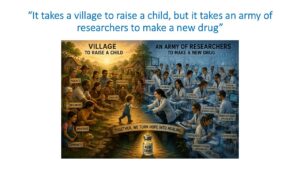
Families and patient organisations often become the driving force behind such programmes. In the case of CTNNB1 syndrome, parents helped raise public awareness and brought together researchers, clinicians and institutions from several countries. The project grew into a broad collaboration involving laboratory scientists, medical teams, manufacturing specialists, quality experts and professionals responsible for regulatory submissions.
Coordinated European funding is also needed to bridge the “translational valley of death”, where promising research requires substantial investment but remains too risky for commercial funders. Public, philanthropic and non-profit support could prevent potential therapies from stalling before they reach patients.
From scientific possibility to public responsibility
URBAGEN shows what can happen when patients, families, researchers, clinicians, manufacturers and regulators work together on a condition that conventional commercial models might overlook. It also demonstrates that successful gene-therapy development requires much more than an innovative vector. Researchers need rigorous safety studies, reliable manufacturing, transparent reporting and long-term clinical monitoring.
The programme also raises a broader question about public responsibility. Scientific progress is creating opportunities to develop treatments for increasingly small groups of patients. Society must now decide how the necessary research, infrastructure and clinical development should be organised and financed so that these opportunities do not remain available only to diseases with a profitable market or families with exceptional fundraising capacity. The early clinical observations presented in the lecture offer grounds for hope, but they are not yet a definitive demonstration of benefit. Continued follow-up will be needed to understand URBAGEN’s safety, the duration of its activity and whether the changes observed in one participant also appear in others.
Whatever the final clinical results, the programme has already generated scientific knowledge, manufacturing experience and a possible development pathway for other ultra-rare conditions. If these resources can be shared, future patient-led programmes may be able to build on what has already been learned rather than beginning alone.
We thank Duško Lainšček for explaining the development of URBAGEN, openly discussing the scientific and financial uncertainties involved, and recognising the contributions of the patients, families, researchers, clinicians, technical specialists and partner organisations behind the programme.