An organ transplant can save a person’s life, but it also creates a lifelong medical challenge. The immune system is designed to recognize and eliminate anything it considers foreign. A transplanted kidney, liver, heart, or lung may therefore be attacked unless the recipient continuously takes medicines that suppress immune activity. These medicines protect the transplanted organ, but they can also increase the risk of infection, cancer, kidney damage, and other complications.
In this lecture given by Leila Amini, from the Berlin Center for Advanced Therapies at Charité University Medical Hospital Berlin given during the CTGCT Summer Workshop we co-organised with BEST Ljubljana, she described a possible alternative: using a patient’s own regulatory T cells to control unwanted immune reactions. She explained how researchers are using gene editing to help these cells remain functional in the presence of tacrolimus, a commonly prescribed immunosuppressive medicine. The lecture also followed the therapy’s demanding journey from laboratory research through manufacturing, regulatory assessment, and preparation for clinical testing.
Key concepts for understanding regulatory T-cell therapy
- Organ rejection: An immune response against a transplanted organ. The recipient’s immune system recognizes biological differences in the donated tissue and may damage or destroy it.
- Immunosuppression: The reduction of immune activity using medicines. Following organ transplantation, immunosuppression helps prevent rejection but may also leave patients more vulnerable to infections, malignancies, and drug-related toxicity.
- Tacrolimus: A medicine that suppresses immune activity by blocking calcineurin, an enzyme that helps activate T cells. It is widely used to prevent organ rejection but can also interfere with regulatory T cells and cause adverse effects, including kidney toxicity.
- Regulatory T cell, or Treg: A specialized immune cell that limits excessive or inappropriate immune responses. Tregs help maintain immune tolerance and prevent immune cells from attacking healthy tissues.
- Autologous cell therapy: A treatment made using cells collected from the person who will receive the therapy. The cells are isolated, processed or modified, expanded, and returned to the same patient.
- Adoptive T-cell therapy: A treatment in which selected T cells are collected and prepared outside the body before being administered to a patient.
- FKBP12: A protein required for tacrolimus to produce its suppressive effect inside a T cell. Removing FKBP12 may allow a T cell to continue functioning despite exposure to tacrolimus.
- CRISPR-Cas gene editing: A technology that can make a targeted change in DNA. In this case, it is used to disrupt the gene encoding FKBP12 in regulatory T cells.
- Off-target editing: An unintended genetic change occurring at a location other than the intended CRISPR target. Developers must investigate such changes because they could affect the function or safety of the modified cells.
- Advanced therapy medicinal product, or ATMP: A European regulatory category covering gene therapies, cell therapies, tissue-engineered products, and certain combinations of these technologies with medical devices.
- Potency assay: A laboratory test that measures whether a medicinal product can perform its intended biological function. For regulatory T cells, this may involve measuring their ability to suppress the proliferation of other immune cells.
- Good Manufacturing Practice, or GMP: A system ensuring that medicinal products are consistently produced and controlled using validated processes, qualified equipment, traceable materials, trained personnel, and documented quality checks.
Teaching the immune system to tolerate a transplant
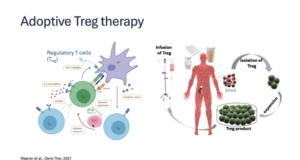
Regulatory T cells, or Tregs, act as a natural brake on the immune system. They control inflammation through direct contact with other cells and by releasing chemical signals that reduce immune activity. Two of these signals, IL-10 and TGF-beta, are proteins that help restrain inflammation and prevent other immune cells from becoming overactive.
This makes Tregs promising candidates for transplantation medicine. A Treg-based therapy could complement conventional immunosuppressive drugs and potentially reduce a patient’s long-term medication burden without compromising protection of the transplanted organ. To produce the therapy, Tregs are isolated from the patient’s blood, expanded under controlled conditions, and returned to the same person.
Early clinical results with non-gene-edited Tregs have been encouraging. In a study of living-donor kidney transplant recipients, more than 80 percent of treated patients were receiving only one or two immunosuppressive medicines at long-term follow-up. Some remained on tacrolimus alone for several years. Reducing drug exposure could lower the risks of infection and cumulative toxicity, although any reduction must be managed carefully to avoid organ rejection. Tacrolimus presents a particular challenge. It suppresses not only the immune cells responsible for rejection, but also the therapeutic Tregs, potentially weakening the treatment over time.
The approach presented by Leila Amini in the lecture, seeks to overcome this problem by removing FKBP12, a protein that tacrolimus needs to suppress T-cell activity. Researchers use CRISPR-Cas gene editing to disrupt the gene responsible for producing FKBP12 in selected Tregs outside the body. The aim is to make only these therapeutic cells resistant while leaving the rest of the immune system responsive to tacrolimus.
Laboratory experiments suggest that the edited Tregs retain their identity and function. They produced few inflammatory signals, remained stable, and showed no evidence that a single abnormal cell had multiplied to dominate the population. Testing their function required a specially adapted experiment. Tacrolimus normally prevents the target immune cells from multiplying, making it difficult to measure the additional effect of Tregs. Researchers therefore created tacrolimus-resistant target cells and showed that the edited Tregs controlled their activity more effectively than unmodified Tregs in the presence of the drug.
Further analysis showed that the edited cells maintained several features associated with immune regulation. These included CTLA-4, a molecule that helps prevent other immune cells from being activated; CD73, an enzyme that helps create a less inflammatory environment; and IL-10, an anti-inflammatory signalling protein. Together, the results support the therapy’s intended mechanism, but clinical studies are still needed to determine whether the edited cells are safe and beneficial for transplant recipients.
From a gene-edited cell to a safe medicinal product
Gene editing can improve cell therapies, but it may also cause unintended changes. Cas9 is designed to cut one selected gene, yet it can sometimes cut similar DNA sequences elsewhere. These changes, known as off-target edits, could present a safety risk if they affect genes involved in cell growth or immune function.
The team combined computer predictions, laboratory tests, and DNA sequencing to identify possible off-target sites. The strongest editing signal appeared at the intended FKBP12 gene (it codes for the protein that tacrolimus needs to suppress T-cell activity), while most other potential changes were found between genes. Regulators nevertheless requested broader analyses that accounted for genetic variation among different populations and used cells produced through the validated manufacturing process.
Researchers must also confirm that the edited cells remain stable, functional, and highly pure. Tregs are selected from the patient’s blood using characteristic surface molecules, particularly high CD25 and low CD127. This helps prevent other immune cells from entering the final product and being edited unintentionally.
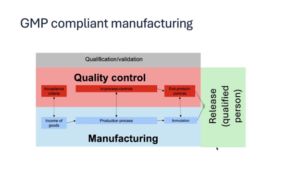
Producing the therapy begins with approximately 50 millilitres of the patient’s blood. The Tregs are isolated, sorted, expanded, edited by electroporation, and grown to the required number. The final cells are then tested for identity, purity, viability, sterility, biological activity, and inappropriate inflammatory behaviour.
Unlike a conventional medicine produced in thousands of doses, this personalized therapy may consist of one batch for one patient. Every material and production step must therefore be controlled and documented. Quality specialists assess whether the product meets predefined standards, while a qualified person decides whether it can be released for clinical use.
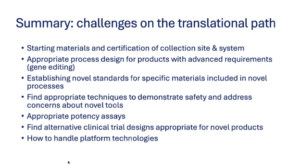
Even routine materials created difficulties. The team had to replace diagnostic blood-collection materials with pharmaceutical-grade heparin prepared under clean-room conditions. They also developed stability tests for Cas9 and its guide RNA to confirm that these gene-editing components remained effective during storage.
Supply changes presented another challenge. When a critical cell-expansion material was discontinued, the researchers had to demonstrate that its replacement produced comparable cells. Such delays show why reliable supply chains, standardized materials, and adaptable regulation are essential for moving advanced therapies from the laboratory to patients.
Navigating regulation and preparing for clinical testing
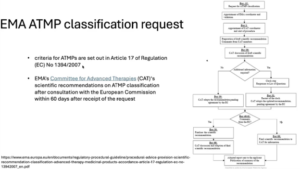
In Europe, genetically modified T cells are generally regulated as advanced therapy medicinal products (ATMPs). This classification determines the evidence required for manufacturing, safety, and clinical testing. Developers can consult European regulatory bodies early to clarify a product’s classification and discuss issues such as study design, production methods, and safety testing.
Clinical trial applications are submitted through the European Union’s Clinical Trials Information System. One part assesses the therapy, manufacturing process, scientific evidence, and trial design. Another covers national and ethical requirements, including informed consent, investigator qualifications, insurance, and data protection.
The team’s first application generated more than 80 requests for additional information, many concerning genetic safety and unintended DNA changes. Further experiments were required before the application could be resubmitted. This highlights how regulation shapes product development from the beginning rather than serving only as a final administrative step.
The proposed first-in-human study would involve living-donor kidney transplant recipients. Tregs would be collected from each patient before transplantation, gene-edited, expanded, and administered after the operation. Participants would initially receive conventional immunosuppressive treatment, which could later be reduced if their condition allowed.
The study would test several cell doses in small groups of patients. Safety would be assessed before moving to a higher dose, with particular attention to adverse reactions and signs of organ rejection. As an early clinical trial, its main purpose would be to evaluate safety rather than prove that the therapy is effective.
If successful, the approach could be extended to other transplanted organs and possibly to recipients of organs from deceased donors. However, the unpredictable timing of these transplants would make personalized manufacturing considerably more difficult.
The same editing strategy could also be applied to antiviral T cells. These cells could help transplant recipients fight infections while they remain on tacrolimus, although each product would require separate evidence of its quality, safety, and function.
Moving such therapies into routine care will require larger clinical studies, long-term patient monitoring, reliable manufacturing, and substantial investment. Academic centres can lead early development, but broader collaboration with hospitals, regulators, industry, and patient organizations may be needed to make personalized treatments affordable and widely accessible.
Conclusion
Tacrolimus-resistant regulatory T cells bring together immunology, gene editing, transplantation medicine, pharmaceutical manufacturing, and European regulation. By removing FKBP12, researchers aim to help therapeutic Tregs retain their suppressive function while patients continue receiving tacrolimus. If the approach proves safe and effective, it could reduce reliance on multiple immunosuppressive medicines and lower some of the long-term burdens associated with organ transplantation.
The work also shows why promising laboratory results are only the beginning. Developers must demonstrate the identity, purity, stability, potency, and genetic safety of the cells. They must control every stage of manufacturing, qualify materials and analytical methods, respond to changing regulatory expectations, and design clinical studies that protect patients while producing meaningful evidence.
We the CTGCT team want to thank Leila Amini for presenting such a detailed account of how a gene-edited cell therapy moves from a biological idea toward clinical evaluation, and for showing how researchers, clinicians, manufacturers, and regulators must work together to bring advanced therapies safely to patients.