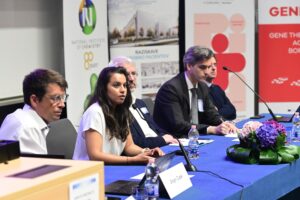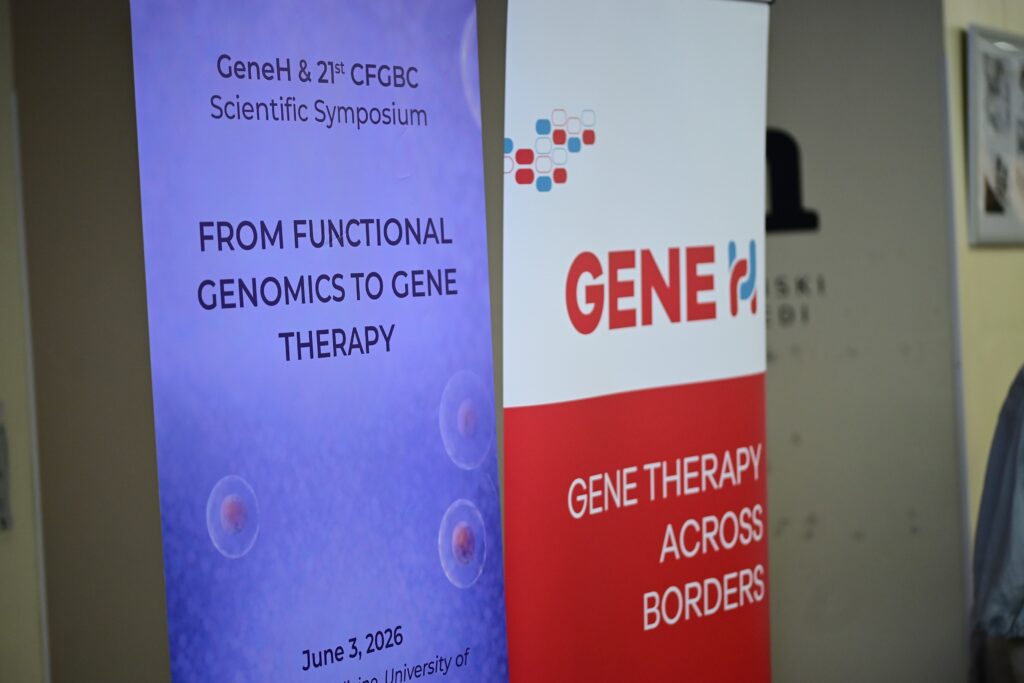
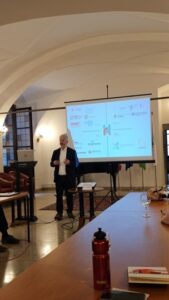
On the 2nd of June 2026, the GeneH Consortium met together in Ljubljana for their yearly meeting and on the 3rd the consortium organized together with the Center for Functional Genomics and BioChips (CFGBC), the GeneH & 21st CFGBC Scientific Symposium, “From Functional Genomics to Gene Therapy”. These events brought together researchers, clinicians, industry representatives, policy-makers and patient organisations. Organised under the Horizon Europe GeneH project by CTGCT and the symposium in collaboration with the CFGBC, the events emphasized how Slovenia and Portugal are building a cross-border hub to accelerate gene therapy innovation and translation.
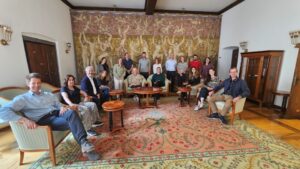
The GeneH consortium yearly meeting
The GeneH consortium meeting, which took place at the Ljubljana city hall thanks to our colleagues from RRA LUR, opened with a clear message: everything begins and ends with the patient. Prof. Dr. Luís Pereira de Almeida, highlighted one of the most pressing challenges in translational science, ensuring that scientific breakthroughs reach the people who need them.
After the opening, we reviewed project progress, key developments and upcoming challenges, including coordination between Portuguese and Slovenian partners, regulatory and manufacturing hurdles, patient involvement, communication priorities, and long-term sustainability.
The meeting also helped clarify how the consortium’s different elements (research, clinical translation, industry, public support and patient organisations) work together. Our colleagues from SIH EGIS recorded short partner videos, which will soon be shared to highlight the people, goals and challenges behind GeneH.
The GeneH & 21st CFGBC Symposium
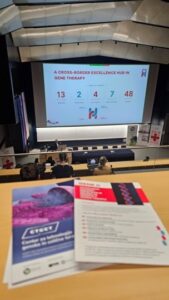
On June 3 we continued at the University of Ljubljana, bringing together the GeneH community and the long-standing CFGBC scientific meeting under the joint theme “From Functional Genomics to Gene Therapy.” Organised by CFGBC and CTGCT, the event created a shared space for interdisciplinary exchange across research, clinical practice and innovation.
The programme covered a broad scientific spectrum, linking functional genomics, omics technologies, rare disease research and translational science. Participants included researchers, clinicians, students, patient representatives and public-sector stakeholders. The agenda combined a dedicated GeneH session, a poster presentation segment and the CFGBC scientific programme, celebrating over 20 years of work in the field.
A central focus of the GeneH sessions was the challenge of translating scientific discoveries into safe, effective and patient-centred therapies. Speakers highlighted the shift in medicine for rare diseases from managing symptoms to addressing root causes, alongside the importance of building strong research infrastructure, international collaboration and translational pathways.
Discussions also addressed the barriers that still limit progress in a round table, including regulatory complexity, manufacturing capacity and funding gaps. The round table was moderated by Gregor Cuzak from ZOPS and brought together: Prof. Dr. Luís Pereira de Almeida, University of Coimbra, Prof. Dr. Rajvinder Karda, University College London, Dr. Frenk Smrekar, JAFRAL, Momir Radulović, JAZMP( Agency for Medicinal Products and Medical Devices of the Republic of Slovenia). It emphasised the importance of the 4-helix model, where academia, industry, public authorities and civil society collaborate closely to move gene therapies towards clinical use.
The symposium reinforced the need for early and meaningful patient involvement and highlighted the broader impact of rare disease research. While focused on a small number of conditions, the knowledge and technologies developed through GeneH have the potential to drive innovation across many areas of medicine, supporting future advances beyond rare diseases.
The afternoon sessions revealed just how wide and interconnected the field has become. From human genomics and pediatric care to cancer models and agricultural genetics, these sessions highlighted the broader ecosystem that supports innovation in gene and cell therapy. These last 2 sessions expanded the focus beyond translational gene therapy into complementary research domains. The programme brought together diverse perspectives across medicine, biotechnology, and life sciences, illustrating the multidisciplinary nature of modern biomedical research.